Charting the Shift from Paper Coupons to Algorithm-Driven Recommendations in Sports Prediction Tools
Written by Dana Carter · Jun 19, 2026

Charting the Shift from Paper Coupons to Algorithm-Driven Recommendations in Sports Prediction Tools
Paper coupons once formed the backbone of organized sports forecasting, with enthusiasts marking selections on printed grids distributed through local outlets and mail services throughout much of the twentieth century. Those physical forms tracked predictions for events such as football matches, horse races, and baseball games, requiring manual tabulation and delayed result verification that often spanned days or weeks.
Early Systems and Their Limitations
Operators compiled results by hand while participants waited for printed outcomes in newspapers or mailed statements, creating bottlenecks that limited both scale and speed. Data collection relied on regional reporting networks prone to transcription errors and incomplete records, yet these methods established baseline participation patterns that later digital platforms would build upon.
By the late 1990s several operators experimented with early computer databases to digitize coupon entries, reducing processing times from weeks to hours in controlled pilots conducted across North American and European markets. Those initial migrations preserved the same fixed-odds structures but introduced electronic storage that allowed rudimentary statistical cross-checks.
Transition to Digital Platforms
Online interfaces replaced paper distribution during the 2000s as broadband access expanded, enabling real-time submission and instant confirmation of selections. Sports prediction tools began incorporating basic historical averages and team performance metrics drawn from public score databases, shifting user focus from static printed lists to interactive web forms.
Industry records indicate that by 2010 more than sixty percent of major prediction services had phased out physical coupons in favor of mobile and desktop applications, according to data compiled by the North American Association of State and Provincial Lotteries. This migration coincided with improved data feeds from leagues that supplied structured statistics directly to platform operators.
Emergence of Algorithmic Recommendations
Algorithms entered the scene once computational power allowed processing of large multivariate datasets including player tracking, weather conditions, and historical head-to-head results. Machine learning models trained on seasons of archived data started generating individualized suggestions rather than generic league-wide statistics, altering how users approached selections in both casual and competitive contexts.
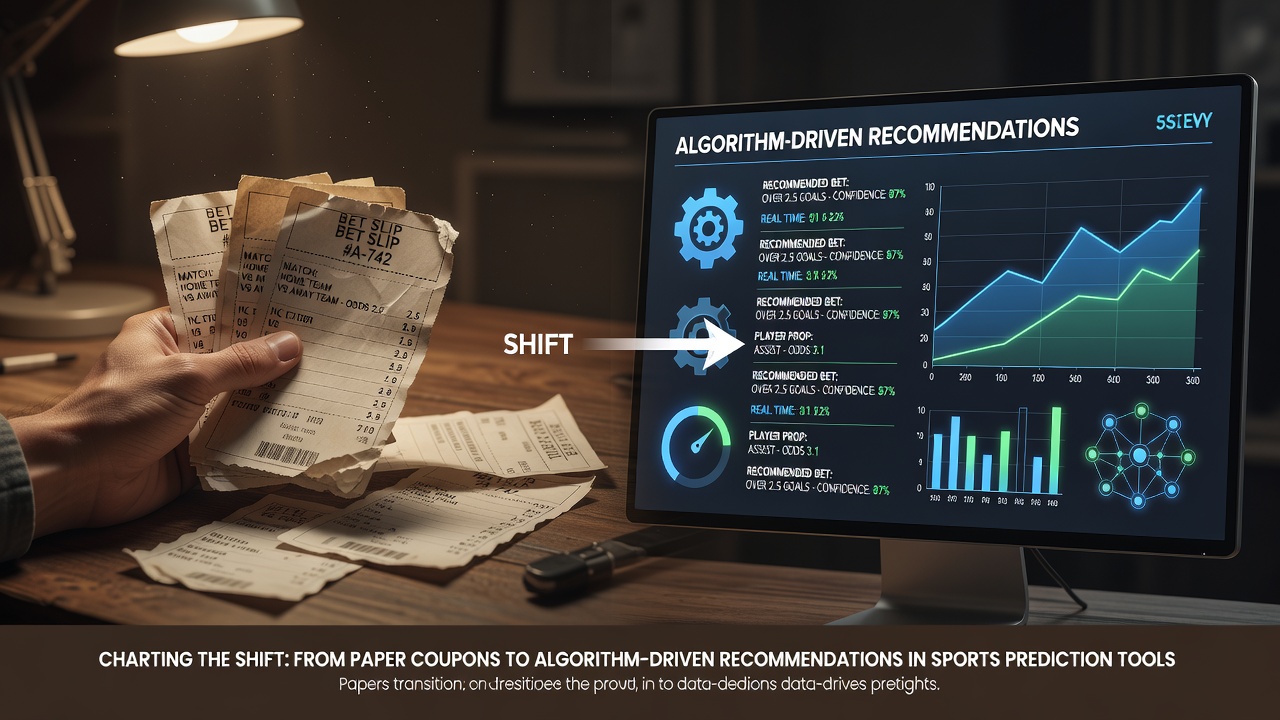
Researchers at institutions such as the University of Queensland documented performance gains when algorithmic outputs supplemented user judgment, noting measurable increases in forecast accuracy across sample groups tracked between 2015 and 2020. These studies emphasized transparent model inputs while highlighting that final decisions remained with individual participants.
Developments Through Mid-2026
By June 2026 several platforms integrated live sensor data from wearable devices and stadium cameras, feeding continuous updates into recommendation engines that adjusted probabilities between game segments. Regulatory filings in Australian jurisdictions show expanded use of such tools among licensed operators, with compliance reporting required to document model fairness and data sourcing practices.
Organizations including the European Gaming and Betting Association have published guidelines encouraging disclosure of algorithmic weighting factors so users understand which variables drive specific recommendations. Those guidelines emerged after consultation with data scientists and legal experts across member states, establishing voluntary standards that many operators adopted ahead of potential legislative requirements.
Case Examples from Different Regions
One major North American service shifted from weekly printed newsletters to a mobile application that delivered personalized lineups based on ensemble models combining regression analysis and neural networks. Participation logs revealed that users who followed at least three algorithm-suggested adjustments per week recorded higher completion rates than those relying solely on manual entry.
In another instance, a Canadian research consortium examined fantasy sports platforms that incorporated reinforcement learning agents, finding that iterative updates based on in-season performance data produced tighter probability bands around projected outcomes. The consortium published its methodology in an open-access journal, allowing independent verification of the underlying code and training datasets.
Technical Components Driving Change
Modern systems typically combine gradient-boosted decision trees with natural language processing of injury reports and social media sentiment indicators. Cloud infrastructure handles the heavy computation while edge devices deliver rapid interface updates, reducing latency that once separated data arrival from user visibility.
Security protocols now encrypt both historical training data and real-time inputs, addressing concerns raised in earlier implementations where partial leaks occurred during transmission. Standards bodies such as the International Association of Gaming Regulators continue to review encryption benchmarks to maintain consistency across jurisdictions.
Conclusion
The progression from paper coupons to algorithm-driven recommendations reflects broader advances in data availability and processing capability that have reshaped sports prediction tools worldwide. Continued refinement of these systems depends on transparent methodologies, diverse data sources, and adherence to evolving regulatory frameworks that balance innovation with participant protections.