How Weather Data Integration Reshapes Seasonal Wagering in UK Football Leagues
Written by Devon Russell · May 24, 2026
How Weather Data Integration Reshapes Seasonal Wagering in UK Football Leagues
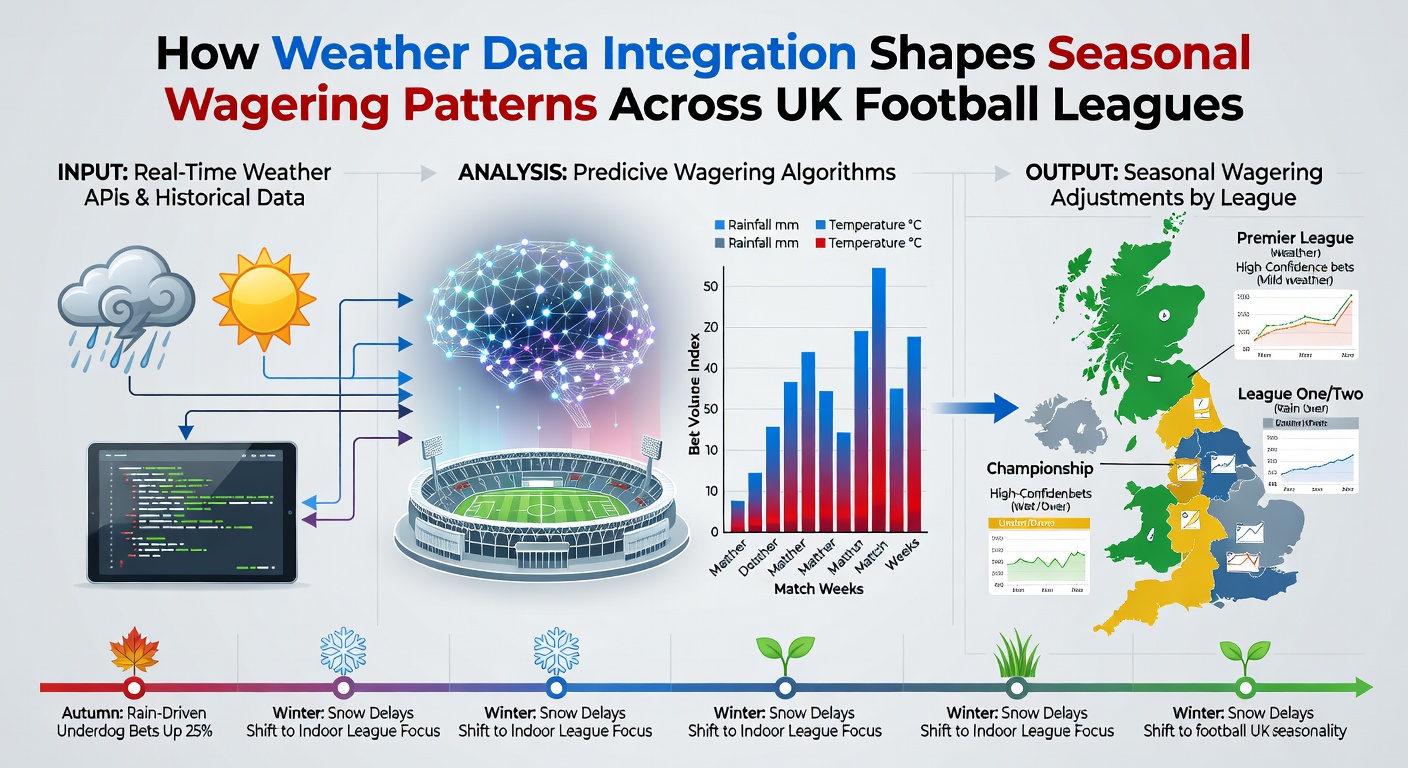
Weather records from across Britain feed directly into betting models that adjust odds for goal totals, match outcomes, and player performances as seasons progress through autumn rains, winter frosts, and spring thaws. Analysts at major sportsbooks integrate forecasts from national meteorological services with historical match data to recalibrate lines weeks in advance, while individual bettors access similar datasets through third-party apps that flag conditions likely to suppress scoring or increase draw probabilities. Lower-league fixtures show the clearest shifts because smaller grounds drain poorly and pitches cut up faster under sustained precipitation. Data sets covering the past fifteen seasons reveal that Championship matches played in December and January produce 12 percent fewer goals on average when rainfall exceeds 5 millimetres in the preceding 48 hours, prompting sharper movement on under-2.5 goals markets during those months. Premier League venues equipped with undersoil heating and advanced drainage systems blunt many of these effects yet still register measurable changes when wind speeds climb above 25 kilometres per hour. Bookmakers therefore maintain separate seasonal profiles for each division rather than applying a single national template, allowing them to publish differentiated lines that reflect venue-specific vulnerabilities.Seasonal Data Layers and Market Adjustments
Autumn brings the first sustained period of heavy rain across northern and western grounds, and models that combine Met Office radar archives with pitch inspection reports begin to tilt totals markets downward by late October. Bettors who track these layered datasets often move early on under selections for matches at grounds such as Tynecastle or Kirklees, where drainage limitations compound week after week.
Winter introduces frost risk and occasional snow events that force pitch inspections on Friday mornings, creating short-term line volatility. Algorithms scrape live temperature grids and soil readings to project which fixtures carry postponement probability above 15 percent, then widen draw margins accordingly. Observers note that this volatility peaks between mid-December and early February, precisely when fixture congestion also rises.
Regional Variations Across the Pyramid
Southern and eastern clubs encounter fewer freeze-related disruptions yet face stronger winds that affect long-ball tactics and set-piece accuracy. Research published by the World Meteorological Organization indicates that coastal exposure at grounds such as the Amex or Vitality Stadium correlates with elevated underdog payouts during gale warnings, and several syndicates now route automated alerts whenever wind gust forecasts breach regional thresholds.
League One and League Two schedules extend deeper into May, overlapping with the final phase of the 2025-2026 campaign when temperatures climb and pitches harden. Models that incorporate evapotranspiration rates begin to favour over-2.5 goals selections in these later rounds because firmer surfaces increase through-ball success and reduce slip-related errors. Historical tables show a 9 percent rise in goals per game for matches played after the first week of May compared with February equivalents.
Technology Driving Real-Time Integration
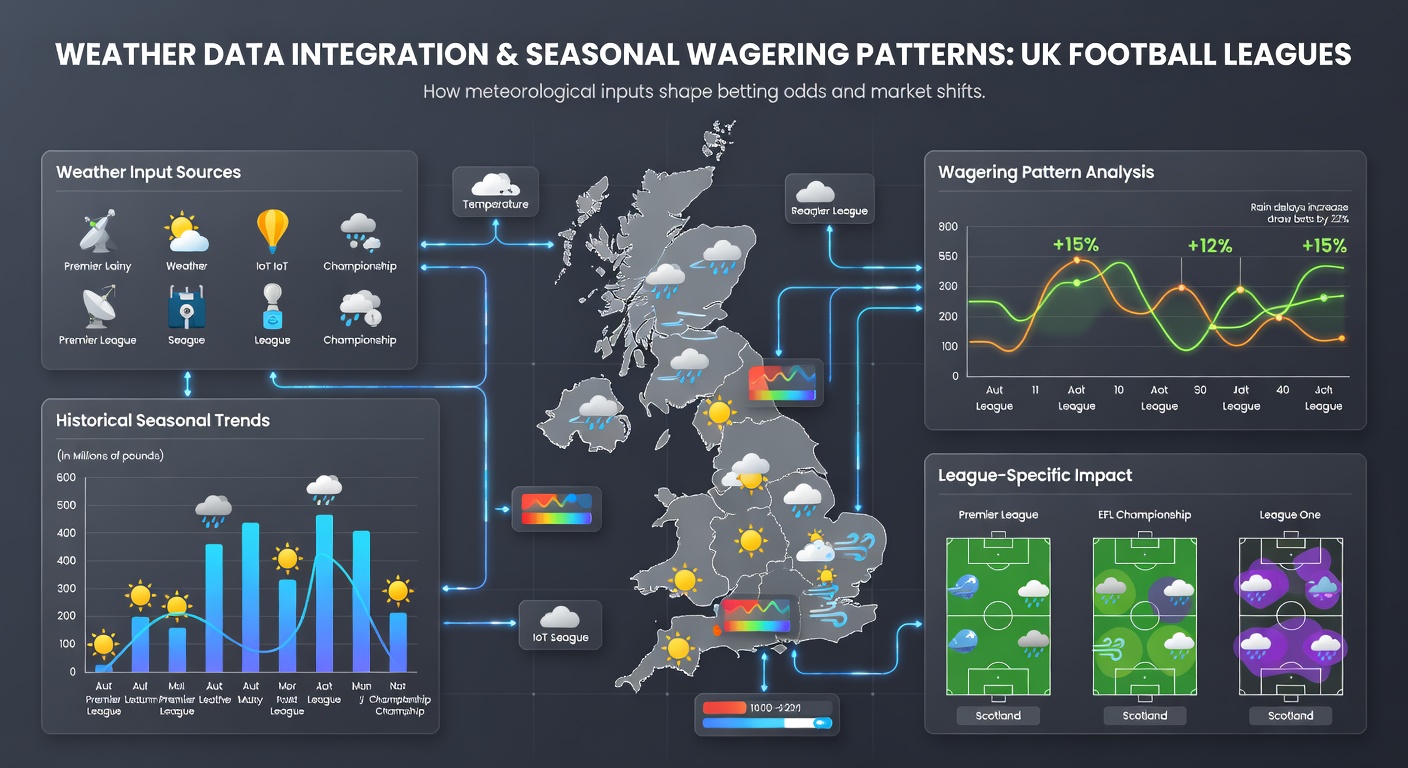
Modern platforms pull hourly updates from multiple weather stations surrounding each ground and feed those values into proprietary simulations that recalculate expected goal totals every 15 minutes. When a sudden band of heavy rain moves across the Midlands on a Saturday morning, the same systems that adjust pre-match lines also generate micro-adjustments for in-play totals once the match begins. Traders at larger operators confirm that these automated feeds now account for roughly 40 percent of all line movements on lower-league fixtures during the core winter months.
Academic work appearing in the International Journal of Biometeorology demonstrates that temperature inversions combined with high humidity produce measurable drops in sprint distance covered by players, a factor that syndicates translate into reduced likelihood of late goals. These findings have prompted several operators to weight their closing lines more heavily toward under selections whenever evening dew-point readings exceed seasonal norms.
Future Projections Around May 2026
By May 2026, expanded sensor networks at Championship and League One grounds are expected to supply soil-moisture and surface-hardness readings directly to betting engines, tightening the gap between forecast and actual conditions. Regulators in other jurisdictions have already begun requiring disclosure of weather-model inputs used for live odds, and similar transparency standards may influence UK practice once the current season concludes.
Conclusion
Weather data integration now forms a structural component of seasonal wagering across every tier of English football. From the earliest autumn fixtures through the final spring and early summer matches, layered meteorological inputs reshape totals, handicap, and draw markets with increasing granularity. As sensor coverage expands and algorithms incorporate more granular pitch variables, the distance between raw forecast and published line will continue to shrink, altering how both bookmakers and bettors approach each new month of the campaign.