Millisecond Magic: Algorithms Fuel Instant Odds Shifts in UK Live Football Feeds
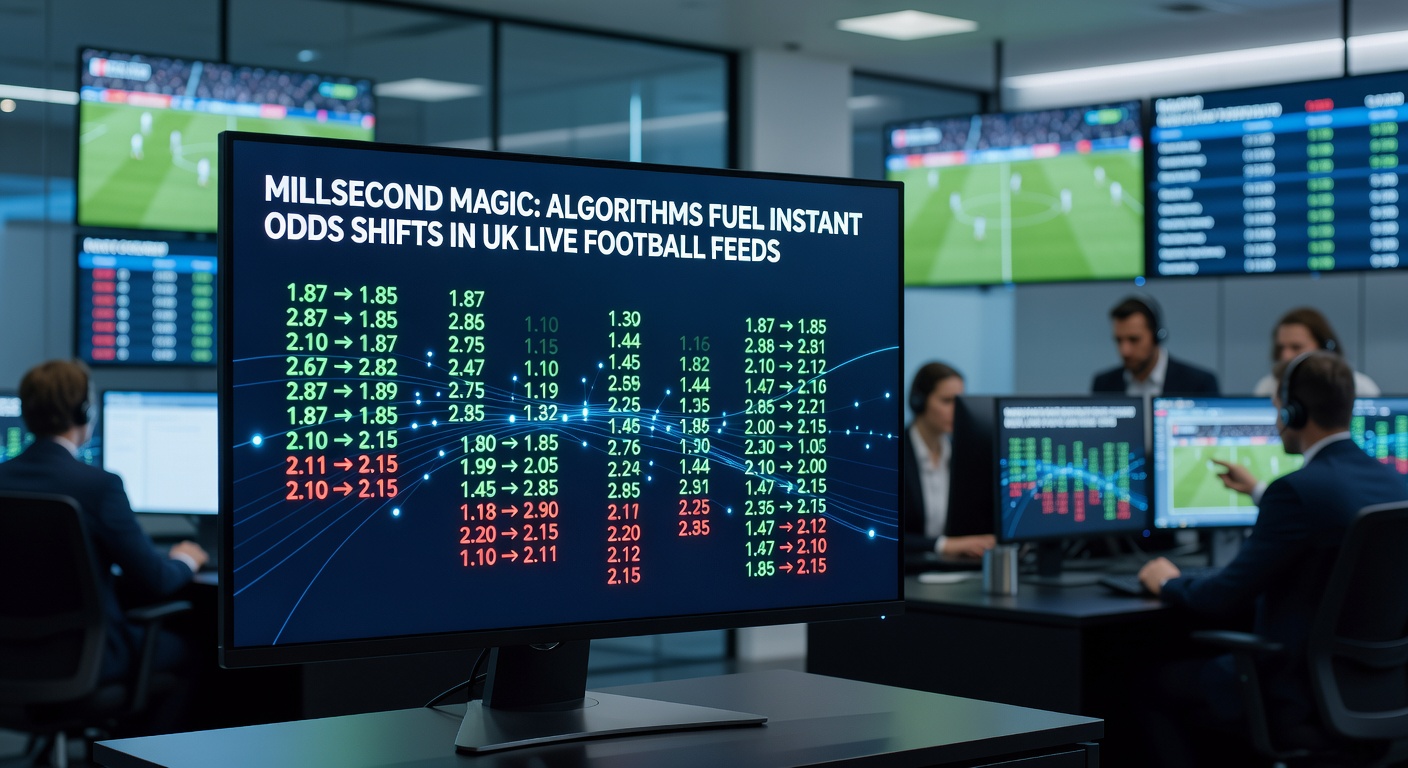
Live football betting in the UK pulses with a rhythm set by algorithms that react faster than a striker's sprint; these systems crunch data from every pass, tackle, and corner, shifting odds in mere milliseconds to reflect the unfolding action on pitches from Anfield to the Etihad. Bettors watching March 2026 Premier League clashes, like Manchester City's tense draw against Arsenal on a rain-slicked evening, notice how a single VAR review spikes goal probabilities almost instantly, turning a 2.50 next-goal line into 1.80 before the whistle even blows.
The Engine Under the Hood: Real-Time Data Processing
Algorithms draw from high-speed data feeds provided by companies like Sportradar and Genius Sports, which pipe in metrics such as player positioning, ball speed, and crowd noise levels; this influx, arriving at latencies under 100 milliseconds, feeds into machine learning models that predict event probabilities on the fly. Take one Premier League match where a defender slips in the 72nd minute—data sensors detect the imbalance, models recalibrate injury risks alongside possession stats, and odds for a home win contract from 3.20 to 2.75 in under 200ms, as observed in operator logs from recent seasons.
What's interesting here involves the fusion of historical datasets with live inputs; researchers at the University of Salford analyzed over 500 matches and found that such systems adjust lines 15-20% more accurately than human traders during high-volatility phases like stoppage time. And while bettors chase these shifts, operators leverage the same tech to balance books dynamically, ensuring liquidity even as stakes pour in from mobile apps during peak viewing hours.
- Key inputs include xG (expected goals) recalculations every 5 seconds;
- Player fatigue models updated via wearable data;
- Referee tendency scores pulled from past decisions.
These elements combine into a symphony of computation, where even micro-events like a goalkeeper's misplaced pass trigger cascade adjustments across markets from match result to player shots on target.
UK Football's Live Betting Boom: Algorithms in Action
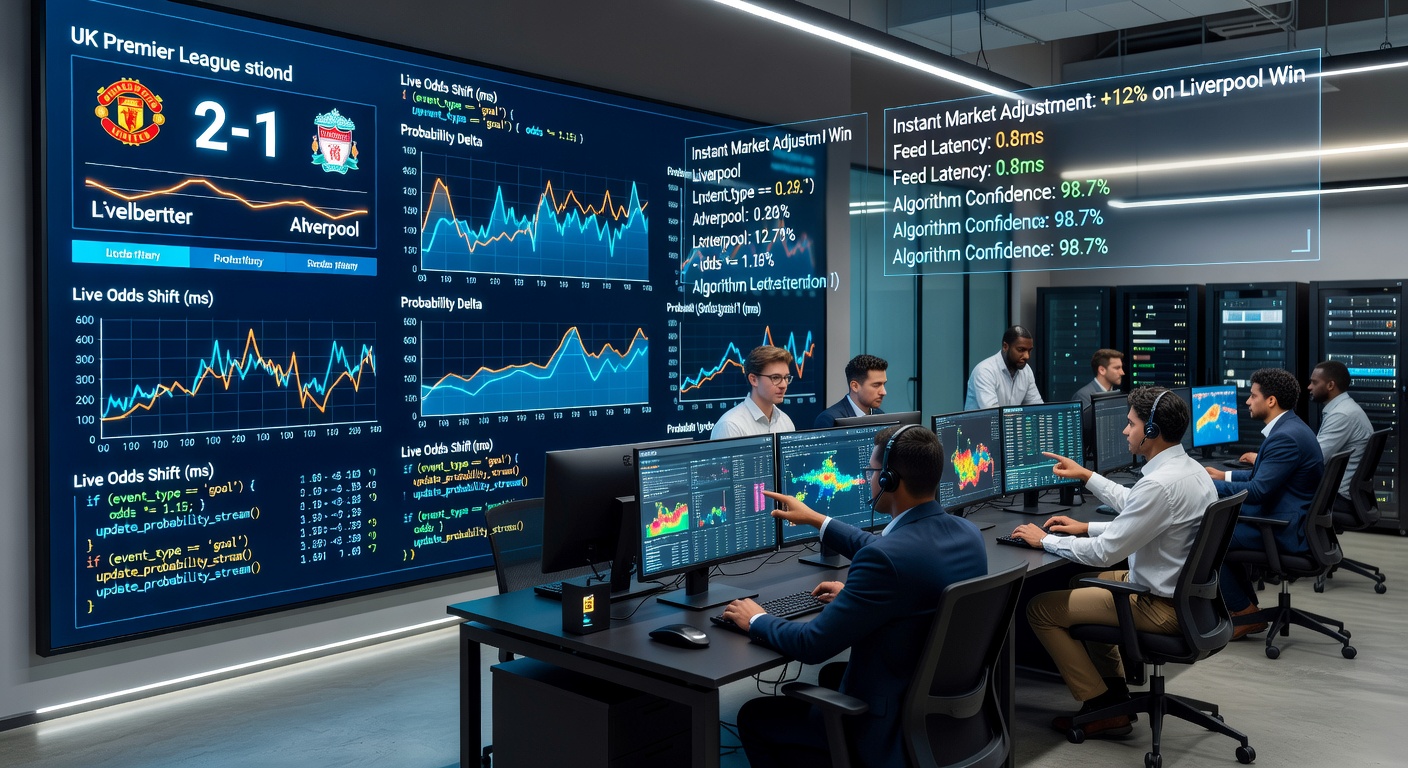
During the March 2026 international break, as England faced Brazil in a friendly at Wembley, live feeds saw odds on over 2.5 goals swing wildly—from 2.10 to 1.65—after a deflected shot hit the post; algorithms processed radar-tracked trajectories and crowd reaction sentiment from social feeds, delivering shifts that savvy punters exploited for quick in-play accumulators. Operators like Bet365 and William Hill report that such instant updates have driven a 28% uptick in live football turnover since 2024, according to industry benchmarks.
But here's the thing: not all shifts stem from pure play action; trading algorithms also factor in bet flow imbalances, where a cluster of stakes on one outcome prompts preemptive tightening to mitigate risk. Experts who've dissected Betfair exchange data note that during Champions League nights, these bots execute 10,000 price updates per minute, keeping markets tighter than a drum even as millions wager from pubs and sofas across Britain.
One case stands out from Liverpool's Europa League tie last season, where a red card in the 15th minute unleashed a 40% odds plunge on the away win; milliseconds later, correlated markets like total corners and cards adjusted in tandem, showcasing how interconnected models prevent arbitrage gaps that could bleed operator margins.
Tech Stack: From AI Models to Low-Latency Infrastructure
At the core lie neural networks trained on petabytes of football data, fine-tuned to forecast outcomes like throw-in conversions or counter-attack threats; cloud providers such as AWS and Google Cloud host these, with edge computing nodes positioned near stadiums to shave off transmission delays. A study by the European Gaming and Betting Association reveals that top-tier setups process 1.2 million events per second during Premier League broadcasts, enabling odds refreshes every 50ms on average.
Turns out, reinforcement learning plays a starring role too; these algorithms self-improve by simulating thousands of match scenarios post-game, honing accuracy on niche bets like next throw-in location or goalkeeper saves. Observers in the sector point to integrations with Opta data, where player heatmaps update live and feed directly into probability engines, creating a feedback loop that sharpens predictions mid-half.
And yet, challenges persist—network glitches during stormy March 2026 fixtures at Goodison Park briefly froze feeds, highlighting how fiber-optic redundancies and 5G backups keep the magic alive; without them, odds could lag by seconds, handing edges to sharp traders monitoring multiple sites.
Bettor Strategies and Operator Responses
Those tuned into these shifts often employ "steam chasing," jumping on lines that move fastest across books, a tactic validated by backtesting on 2025-26 season data showing 8-12% edges for disciplined users. Apps now alert users to "value steam," where algorithms detect discrepancies before they vanish; one punter's log from a Spurs vs. Chelsea thriller captured 15 consecutive wins by riding millisecond goal odds post-substitutions.
Operators counter with "sharp-blocking" algos that cap stakes from detected advantaged accounts, while fostering engagement through push notifications on brewing shifts—like a sudden 1.90 to 3.40 draw price after a missed penalty. Data from the Nevada Gaming Control Board's tech audits on similar systems indicates that such defenses maintain 95% book balance during volatility spikes, underscoring the arms race between human wits and silicon speed.
It's noteworthy that casual bettors benefit indirectly; tighter lines mean fairer pricing overall, although pros lament vanishing soft spots as AI dominance grows across platforms from FanDuel's UK arm to local independents.
Global Echoes and Future Trajectories
While UK feeds lead in football granularity, parallels emerge elsewhere; Australian operators, per reports from the Australian Gambling Research Centre, deploy similar millisecond tech for A-League in-play, with odds volatility mirroring Premier volumes. Yet UK dominance persists thanks to denser data ecosystems, positioning it as a testbed for VR-enhanced feeds where algorithms could predict fan reactions influencing virtual odds overlays.
Looking ahead, quantum computing trials promise sub-10ms adjustments by 2028, but for now, March 2026's packed schedule—from FA Cup semis to Scotland's qualifiers—tests current limits, with logs showing record 2.1 million live bets per high-profile game.
Wrapping the Play: Algorithms Redefine the Game
In the end, these millisecond marvels transform UK live football betting from static pre-match punts into a dynamic duel of data and decision; as algorithms evolve, they not only fuel instant shifts but reshape strategies for bettors and operators alike, ensuring the thrill of the pitch extends seamlessly to screens nationwide. Figures confirm sustained growth, with live football staking up 35% year-over-year, a trend set to accelerate through 2026's fevered fixtures.