Wearable Fitness Devices Enhance Accuracy in Football In-Play Betting
Written by Petra Reed · Aug 23, 2026
Wearable Fitness Devices Enhance Accuracy in Football In-Play Betting
Player fitness trackers have shifted how in-play football betting markets operate by supplying continuous streams of biometric and movement data that inform live odds adjustments throughout matches. These devices, typically worn as vests or straps, capture metrics such as heart rate variability, total distance covered, acceleration patterns, and recovery intervals between high-intensity efforts. Betting operators and data providers integrate this information into algorithms that recalculate probabilities for outcomes like next goal timing, corner counts, and player-specific props as fatigue levels rise or fall.
Data Streams Driving Market Adjustments
Modern GPS and inertial measurement units record positional data at frequencies exceeding 10 hertz, while optical heart rate sensors update every second. When a midfielder's sprint count drops below established thresholds after 60 minutes, models often flag elevated substitution likelihood and reduced pressing intensity, which in turn influences over/under markets on total passes or tackles. Research from the University of Queensland's Centre for Sport and Exercise Sciences demonstrates that teams maintaining average heart rates above 85 percent of maximum for prolonged periods show measurable declines in successful pass completion rates during the final 15 minutes of halves.
Analysts at professional clubs and third-party providers cross-reference these readings against historical match files to generate expected value adjustments that feed directly into bookmaker systems. The result appears in narrower spreads on live markets and faster price movements when a key defender's workload spikes beyond norms.
Integration with Live Betting Platforms
Bookmakers receive anonymized aggregate feeds from clubs or leagues that have approved data partnerships, allowing real-time updates without revealing individual player identities in violation of privacy rules. During the opening weeks of the 2026-27 season, several top-flight fixtures saw live odds on total goals adjust within seconds of visible drops in team high-speed running distances tracked by wearables. Bettors monitoring secondary data services that publish processed metrics gain visibility into these shifts, though access remains restricted in many jurisdictions.
Performance Indicators and Betting Correlations
Studies tracking elite European squads reveal that players covering more than 10 kilometers at intensities above 20 kilometers per hour experience elevated injury risk in subsequent match segments, a pattern reflected in prop markets for player appearances or minutes played. Conversely, squads demonstrating stable recovery metrics between bursts maintain higher expected goal outputs, supporting narrower lines on draw probabilities. Observers note these correlations strengthen when combined with contextual factors such as temperature, fixture congestion, and travel schedules.
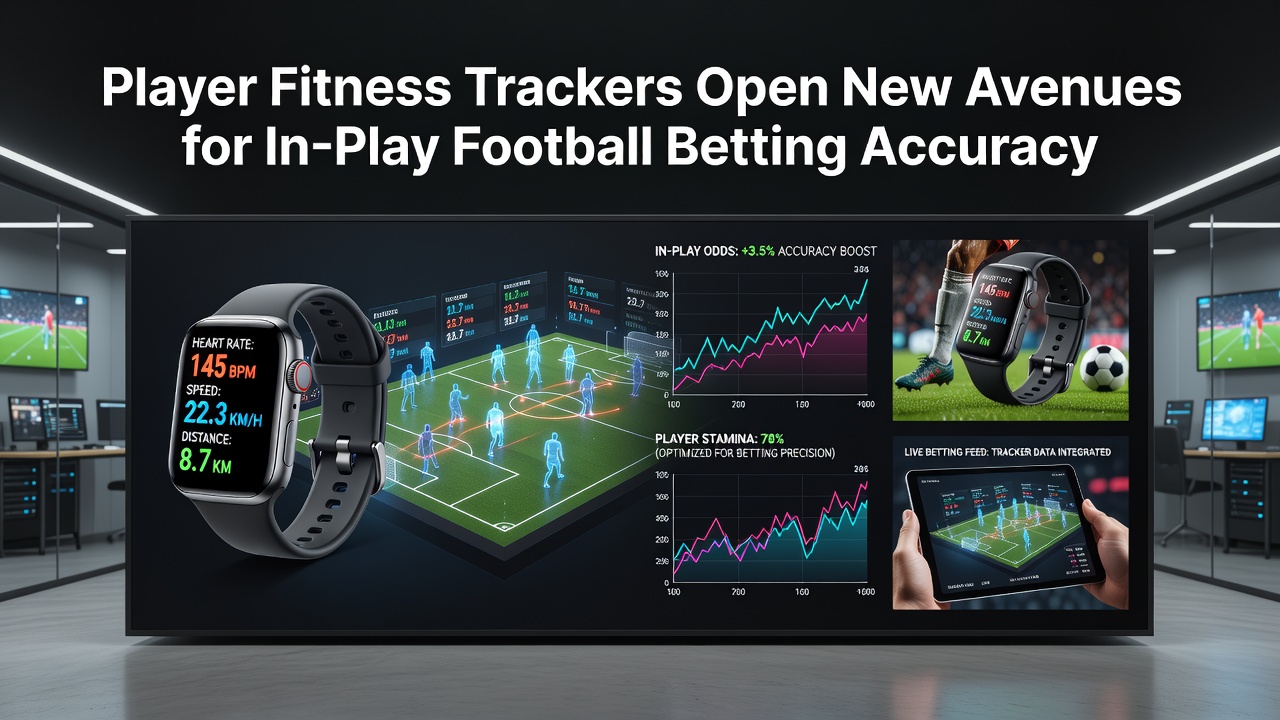
One documented case from Bundesliga analysis showed that when a central striker's repeated acceleration count fell 30 percent below seasonal averages by the 55th minute, the probability of a substitute entering rose sharply, prompting corresponding movements in anytime goalscorer lines. Such granular signals allow markets to price individual contributions more precisely than traditional possession or shot statistics alone permit.
Industry Adoption Patterns
European leagues have expanded wearable mandates across academies and first teams since 2023, with data sharing agreements now covering multiple competitions. Australian professional clubs adopted similar systems earlier, and reports from Football Australia highlight improved load management protocols that indirectly affect squad selection predictability. These standardized datasets create comparable benchmarks across borders, enabling model builders to refine fatigue curves that apply to both domestic leagues and international tournaments.
August 2026 marked the first full month where several major betting platforms incorporated fatigue-adjusted expected goal models into their in-play engines for the new season, resulting in documented reductions in margin variance on select over/under lines according to industry performance summaries. The timing coincided with pre-season testing data becoming available for public consumption through licensed analytics partners.
Regulatory and Technical Considerations
Privacy frameworks in the European Union and Australia require anonymization of individual biometric readings before commercial distribution, which limits granularity yet preserves aggregate utility for market pricing. Technical standards set by FIFA's quality programme for electronic performance and tracking systems ensure measurement consistency across device manufacturers, reducing discrepancies that previously affected model reliability. Compliance with these protocols allows broader adoption without compromising player data protections.
Conclusion
Fitness tracker integration continues to refine in-play football betting by supplying objective workload indicators that supplement conventional statistics. As device accuracy improves and league-wide data protocols mature, live markets gain additional inputs that reflect real-time physiological states rather than relying solely on visual cues or historical averages. The pattern established through 2026 suggests sustained expansion of these data sources into secondary betting products and player prop refinements across multiple competitions.